
Aritzia vs. Smaller Boutiques: Quality for Less
Posted on août 25 2026

Table of Contents
- Price-to-Value Reality: Aritzia vs. Smaller Boutiques
- How to Spot Quality Clothing Before You Buy
- Affordable Quality Clothing Brands in Canada
- Why Shopping Local in Canada Matters
- Building a Capsule Wardrobe on a Budget
- Care and Maintenance: Protecting Your Investment
- Conclusion
Last Updated: August 25, 2026
Price-to-Value Reality: Aritzia vs. Smaller Boutiques
When you're shopping for affordable quality clothing brands in Canada, the choice between a major retailer and a smaller boutique feels like picking between convenience and integrity. Aritzia vs. smaller boutiques: where can I get better quality for a lower price? This question sits at the heart of how many shoppers approach their wardrobes today.
The truth is more nuanced than price tags alone suggest. Aritzia operates at scale with significant marketing budgets, established supply chains, and the overhead that comes with being a household name. Smaller boutiques, by contrast, often handpick their inventory, work with local or ethical manufacturers, and pass savings directly to customers by cutting out middlemen. Neither is universally "better", but understanding what you're actually paying for changes everything.
At Betty Be Good Boutique, we've spent years curating pieces that prove you don't need to choose between trend-forward style and genuine value. The real question isn't which retailer to shop, but how to evaluate quality yourself so you make smarter decisions wherever you buy.
How to Spot Quality Clothing Before You Buy
Before comparing retailers, you need a framework for evaluating garments. This is the skill that separates savvy shoppers from those who chase sales.
Fabric Composition and Durability
The fiber content tag tells you everything about how a piece will perform. Natural fibers like cotton, linen, and wool tend to age beautifully and breathe well against skin. Synthetic materials like polyester and acrylic are cheaper to produce, which is why fast fashion relies on them. But here's what matters: a quality synthetic blend can outlast cheap natural fibers if the garment construction is solid.
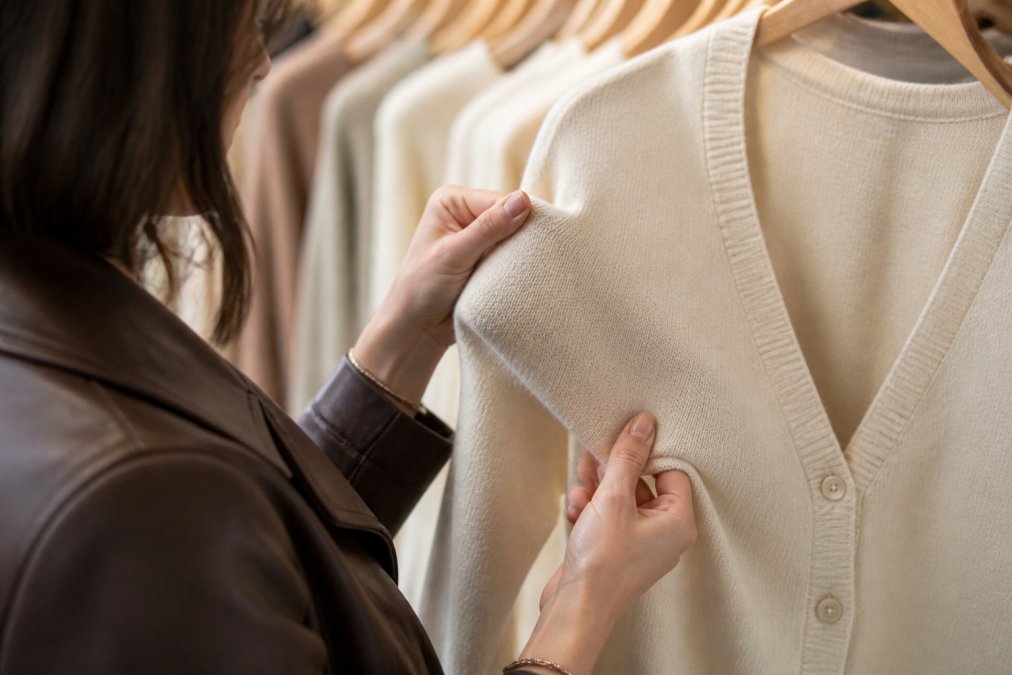
Look for fiber percentages that make sense for the garment type. A 100% cotton t-shirt will shrink and fade faster than a 95% cotton, 5% elastane blend. A cardigan labeled "just like cashmere", like the Just Like Cashmere Button Cardi, should feel soft and drape well without pilling after a few wears. That's the test.

When you're comparing pieces, feel the weight of the fabric. Heavier fabric usually means better durability. Run your fingers across the surface; quality textiles feel smooth and consistent. Cheap fabric often feels thin, papery, or overly slick.
Seam Integrity and Garment Construction
Seams are where quality truly reveals itself. Open a seam and look at how thread is locked. Quality stitching has tight, even spacing, typically 8-12 stitches per inch ([EXTERNAL_LINK: Canadian Textile Labelling Act | laws-lois.justice.gc.ca]). Loose or uneven stitching means the seam will fail within months.
Check for reinforced stress points. The underarm seams on a dress, the waistband on pants, and the armholes on sweaters all take repeated strain. Boutique-quality pieces reinforce these areas with double stitching or binding. Fast fashion often skips this step entirely.
Look at hems. A quality hem is folded twice and stitched evenly. Cheap hems are often single-fold or glued, which unravels in the wash. On pieces like the Black Polka Dot Midi Skirt, a proper hem that's fitted at the waist but loose on the hips shows thoughtful construction.
Buttonholes matter too. They should be clean, tight, and reinforced. Buttons should be sewn with a thread shank, a small gap between the button and fabric, so they don't stress the fabric when you fasten them.
Cost-Per-Wear as Your Decision Framework
This framework changes how you shop. Instead of asking "Is this cheap?", ask "How many times will I actually wear this?"
A $99.90 vegan leather trench coat worn twice a week for two years costs roughly $0.48 per wear. A $29 fast-fashion alternative worn three times before it falls apart costs $9.67 per wear. The boutique piece wins decisively.
Calculate this way: divide the price by the number of times you'll realistically wear it. Include cleaning costs if applicable. A piece you wear 100 times over two years is worth far more than a cheaper piece you wear ten times.
This metric reveals why smaller boutiques often deliver better value. They price pieces at $59.90 to $99.90, high enough to signal quality, low enough to be accessible. Aritzia prices similarly, but their overhead is higher, so you're often paying for the brand name rather than superior craftsmanship.
Affordable Quality Clothing Brands in Canada
When you're hunting for affordable quality clothing brands in Canada, smaller boutiques consistently outperform larger retailers on value. Here's what distinguishes them.
Smaller boutiques typically curate rather than mass-produce. They select pieces from multiple makers, test quality before stocking, and drop inventory when pieces don't perform. This means less dead stock, less waste, and more intentional curation.
Betty Be Good Boutique exemplifies this approach. Every piece, from the Chunky Knit Wood Button Cardi at $89.90 to the Crochet Blanket Cardigan at $89.90, is handpicked for fit, durability, and style. The result is a cohesive collection where pieces actually work together, not a sprawling inventory where you hunt for items that coordinate.

The advantage over Aritzia becomes clear when you examine price-per-quality. Aritzia carries house brands designed to maximize margins. Smaller boutiques carry independent makers with tighter quality control. You're not paying for advertising or flagship stores; you're paying for curation.
| Factor | Smaller Boutiques | Aritzia |
|---|---|---|
| Price Range | $49.90-$99.90 | $49-$128 |
| Curation | Handpicked | Trend-driven |
| Inventory Depth | Shallow, intentional | Deep, competitive |
| Return Policy | Varies, often flexible | Standard retail |
| Ethical Transparency | Often disclosed | Less transparent |
Free shipping from Canada to Canada & US when you spend $99+ means boutiques can compete on total cost, not just per-item pricing. Aritzia charges shipping unless you hit higher thresholds.
Why Shopping Local in Canada Matters
Ethical Production and Supply Chain Transparency
When you buy from a smaller boutique, you're more likely to know where pieces come from. Many boutique owners maintain relationships with makers and can tell you about fabric sourcing, labor practices, and production timelines. Aritzia, as a large corporation, publishes sustainability reports but operates at a scale where individual accountability becomes harder.
Ethical production isn't just about fair wages, though that matters deeply. It's about environmental impact. Smaller makers often produce in smaller batches, meaning less overstock and less waste. They're incentivized to source quality fabrics because they carry the reputational risk if pieces fall apart.
Many boutiques now work directly with makers who support specific causes. Some support survivors of human trafficking, reinvesting profits into job training and housing. Others prioritize Indigenous artists or women-owned manufacturers. This direct connection is harder to trace in large corporate supply chains.
Supporting Small Business with Real Impact
When you spend $79.90 on a skirt at a small boutique, more of that money stays in the community. The owner uses it to pay staff, stock new inventory, and reinvest in the business. When you spend the same at a major retailer, the profit flows to shareholders and corporate headquarters.
Small business owners often reinvest in their communities. They sponsor local events, hire local staff, and source from local makers when possible. This creates a multiplier effect: your purchase supports not just the boutique, but the broader ecosystem around it.
Shopping local also means you're building a relationship with someone who knows your style. Over time, boutique owners learn what works for your body, your preferences, and your lifestyle. They'll text you when something arrives that's perfect for you. They'll hold pieces. They'll offer honest feedback about fit. This service is impossible at scale.
Building a Capsule Wardrobe on a Budget
A capsule wardrobe is a small collection of pieces that work together. Instead of owning 50 items, you own 20 that mix and match endlessly. This approach is especially powerful when you're shopping at smaller boutiques, because curated collections naturally support capsule building.
Start with neutral basics: cream, navy, black, and grey. These form your foundation. Then add one or two accent colors that complement your skin tone. The Just Like Cashmere Button Cardi at $59.90 in cream is a perfect foundation piece, it layers over everything, transitions seasons, and will last years with proper care.
Add layering pieces. A trench coat like the Vegan Leather Belted Trench Coat at $99.90 works over dresses, with jeans, or over sweaters. It's an investment piece that anchors a capsule.

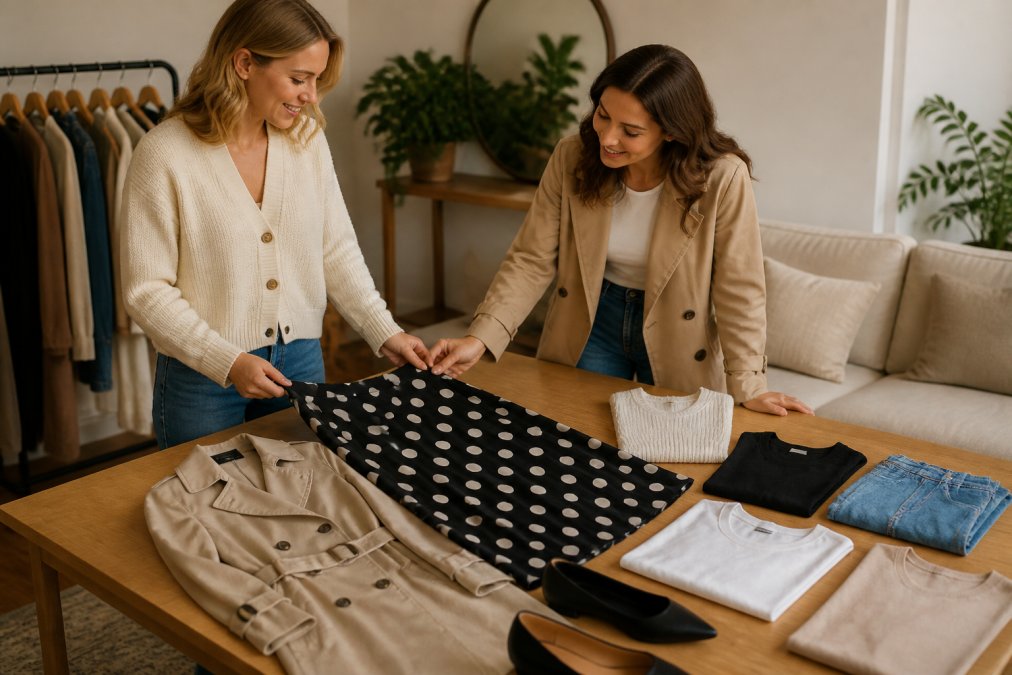
Add bottoms in neutral colors. The Black Polka Dot Midi Skirt at $79.90 works with virtually any top. A well-fitting pair of jeans or neutral pants is essential.
Fill gaps with one or two statement pieces. The Crochet Blanket Cardigan at $89.90 adds texture and visual interest without clashing with basics.
The key is intentionality. Before buying anything, ask: Does this work with at least three pieces I already own? If the answer is no, skip it. A $40 piece that sits unworn costs infinitely more per wear than a $100 piece you wear twice a week.
Care and Maintenance: Protecting Your Investment
Quality pieces demand proper care, but it's simpler than most people think. The difference between a cardigan that lasts two years and one that lasts ten is often just how you wash it.
Read care labels carefully. They're not suggestions; they're the maker's promise about how the garment will perform. If it says hand wash, hand wash it. If it says lay flat to dry, don't hang it. These instructions exist because the maker tested the garment under those conditions.
For knitwear, use cold water and a gentle detergent. Wool and cashmere-blend pieces shrink in hot water. Lay them flat to dry; hanging stretches the fibers. Pilling is normal for knitwear in the first few wears, use a fabric shaver or sweater stone to remove it gently. This doesn't mean the piece is low quality; it means fibers are settling.
For woven pieces, turn them inside out before washing to reduce fading and pilling. Wash in cold water with like colors. Hang dry or lay flat depending on the fabric weight. Heavy pieces like the Vegan Leather Belted Trench Coat should be spot-cleaned or dry-cleaned sparingly, most stains come out with a damp cloth.
Store pieces properly. Use wooden hangers for delicate items; plastic stretches shoulders. Fold heavy knitwear rather than hanging it. Use cedar blocks or lavender sachets to deter moths, they're more effective than mothballs and won't damage fabric.
Invest in a good iron and steamer. Wrinkles fade with proper pressing, and the care you show extends the visual life of a piece. A wrinkled $100 piece looks cheap; a well-pressed $50 piece looks expensive.
The choice between Aritzia and smaller boutiques isn't about finding the absolute cheapest option. It's about understanding what you're paying for and making intentional decisions. Smaller boutiques like Betty Be Good Boutique deliver better quality for less because they cut overhead, curate carefully, and price fairly. When you learn to spot quality yourself, examining fabric, seams, and construction, you can shop confidently anywhere. The pieces that earn their place in your closet, worn repeatedly and cared for properly, are always the best value. Start with Betty Be Good Boutique's handpicked collection, where free shipping on orders over $99 shipped from Canada to Canada means you're getting genuine value without hidden costs.
Frequently Asked Questions
How do I know if affordable quality clothing brands in Canada are actually worth the price?
Check fabric composition first: natural fibers like cotton, linen, and wool hold up better than synthetics alone. Examine seam integrity by looking at stitching consistency and thread quality. Calculate cost-per-wear by dividing the price by how many times you'll realistically wear it. A $60 cardigan worn 100 times costs $0.60 per wear; a $120 piece worn 50 times costs $2.40. Smaller boutiques often have lower retail markups than major retailers, which means better value at lower price points. Read customer reviews specifically about durability and fit consistency across sizes.
What's the actual difference between Aritzia's quality and smaller boutiques?
Aritzia operates as a mass-production retailer with significant markup built into pricing. Smaller boutiques curate their inventory more selectively, often working directly with manufacturers to reduce costs. Both can offer quality pieces, but boutiques typically pass savings to customers rather than inflating prices. The difference isn't always in the garment itself, it's in the supply chain markup. A piece costing $40 to produce might sell for $120 at a major retailer but $75 at a boutique. Boutiques also offer more personalized fit guidance.
How do I evaluate fabric composition when shopping for durable clothing?
Look at the fiber content label: 100% natural fibers (cotton, linen, wool, silk) or high-quality blends (80%+ natural with a small synthetic percentage for stretch) perform best. Avoid pieces that are mostly synthetic unless the garment is specifically designed for performance. Check how the fabric feels: quality cotton has a smooth, substantial weight; cheap cotton feels thin and papery. Run your fingers across the surface, pilling (fuzzy balls forming) happens faster on low-quality fabric. For knitwear like cardigans, tighter knit construction resists pilling better. Natural fibers also breathe better and age more gracefully than synthetics.
Why should I shop local Canadian boutiques instead of major retailers?
Shopping local in Canada supports small business owners who often reinvest profits into their communities and causes they believe in. Many independent boutiques have transparent supply chains and work with ethical manufacturers, giving you visibility into how your clothes are made. You also get better customer service, boutique owners know their inventory intimately and can help you build a cohesive wardrobe instead of impulse buying. Plus, shipping from within Canada means no duty, faster delivery, and simplified returns if something doesn't fit.
This article was written using GrandRanker

0 comments