Trendy vs Budget Fashion: Smart Investment Guide
Posted on octobre 03 2026

Table of Contents
- The Real Cost of Chasing Trends vs Building a Wardrobe
- Fast Fashion vs Quality Clothing: What the Price Tag Doesn't Tell You
- How to Build a Capsule Wardrobe Without Sacrificing Your Style
- Best Quality Affordable Clothing Brands: What to Look For
- The Psychology of Trend-Chasing: Why We Buy What We Don't Need
- Repair, Tailoring, and Resale: Extending Your Budget Fashion Investment
- Building a Sustainable Wardrobe on a Budget: Your Action Plan
- Frequently Asked Questions
Last Updated: October 3, 2026
The Real Cost of Chasing Trends vs Building a Wardrobe
Budget fashion is not about spending less. It is about spending once on pieces you will still reach for next season.
At Betty Be Good Boutique, women of every age say the same thing: they own plenty of clothes and still have nothing to wear.
Below: how to tell quality from filler, calculate cost per wear, and build a wardrobe that stays stylish on a budget.
Fast Fashion vs Quality Clothing: What the Price Tag Doesn't Tell You
A low price tag is a promise about today; a well-made garment is a promise about the next three years. Fast fashion wins on novelty and speed but loses on fabric weight, seam finishing, and how a piece holds up after a few washes. Quality clothing costs more upfront and less over time, if you actually wear it.
How to Spot Quality Construction in Budget Fashion
Check these five things before you buy, in person or online:
- Fabric composition label. Natural fibers like cotton, modal, and lyocell breathe better and age more gracefully than a high synthetic blend.
- Seam finishing. Look for clean, reinforced stitching rather than loose threads or skipped stitches.
- Buttons and zippers. Plastic buttons that feel flimsy and stiff zippers are the first things to fail.
The Cost-Per-Wear Calculator: Your Best Budget Fashion Tool
Cost-per-wear is the price of a garment divided by how many times you wear it, the most useful number in budget fashion, and almost nobody calculates it.
| Garment | Price | Wears Per Year | Years Worn | Cost Per Wear |
|---|---|---|---|---|
| Trend top | $30 | 3 | 1 | $10.00 |
| Modal Easy Fit Tee | $49.90 | 40 | 3 | $0.42 |
| Statement dress | $120 | 4 | 2 | $15.00 |
| Palazzo trouser jeans | $119.90 | 30 | 3 | $1.33 |
The cheap top costs twenty times more per wear than the tee that felt expensive at checkout.

How to Build a Capsule Wardrobe Without Sacrificing Your Style
A capsule wardrobe is a small, intentional set of pieces that mix and match into far more outfits than their number suggests. Most capsules land between 25 and 40 items, including shoes and outerwear.
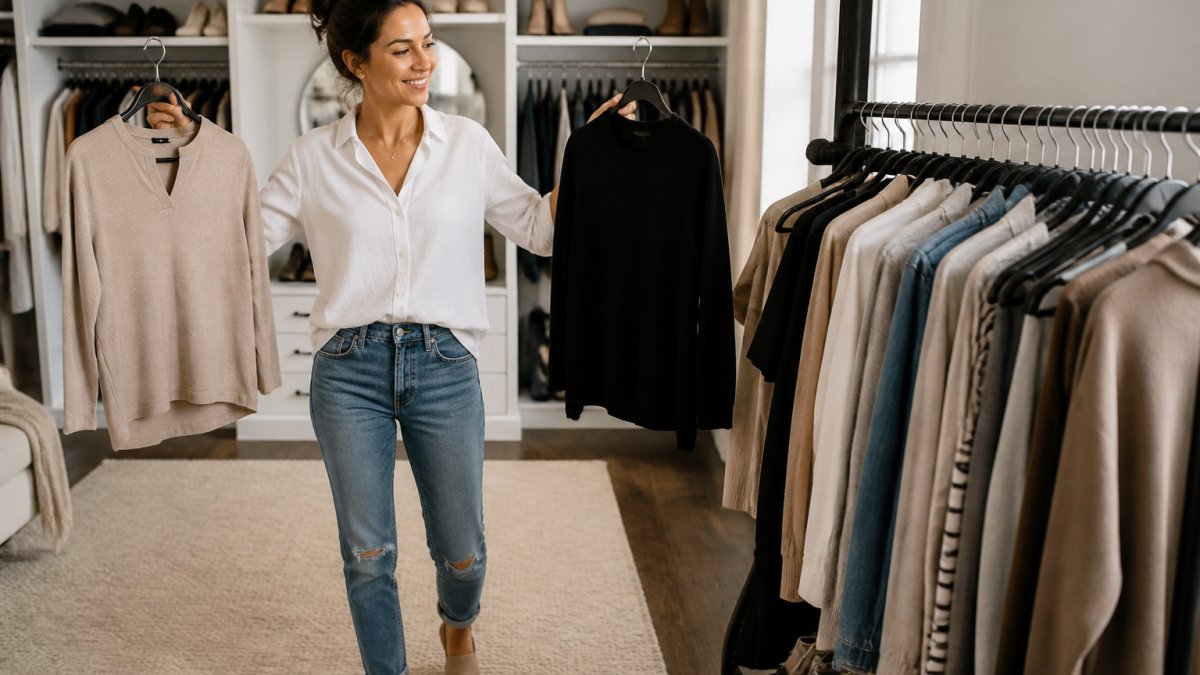
The trick is not minimalism for its own sake, but a tight color palette and consistent silhouette so everything works together.
The Outfit Math: Why 30 Pieces Beats 100
Here is the mechanism most capsule guides skip. If you own 30 pieces and each pairs with at least 10 others, you have hundreds of combinations, not 30 outfits. The math breaks down when pieces pair with only one or two others, a statement top in a color that matches nothing is a single outfit taking up closet space.
Choosing Your Palette: The Three-Color Rule
Pick two neutrals and one accent. Everything you buy should work with at least one neutral, and the accent should be a color you actually enjoy wearing, not a trend color you saw once.
Common neutral pairings that work across seasons:
- Black and cream, with a warm accent like rust or olive
- Navy and gray, with a cool accent like dusty blue or burgundy
- Camel and white, with a green or terracotta accent
Once your palette is set, shopping gets faster. If a piece does not fit the palette, it does not come home, no matter how adorable it looks. That single rule prevents most impulse buys.
Your Capsule Anchor List
Start with these anchors, and adjust quantities to your climate and lifestyle:
- Two or three neutral bottoms that fit well (denim, tailored trouser, or a wide-leg cut)
- Four to six tops in colors that all pair with those bottoms
- One layering piece, like a trench or cardigan
Budget Allocation: Where to Splurge and Where to Save
Spend where fit and durability matter most, save where trends move fastest.
| Category | Spend Level | Why |
|---|---|---|
| Denim and trousers | Higher | Fit and fabric decide how often you wear them |
| Outerwear | Higher | Worn daily, hardest to replace |
| Tops and tees | Moderate | High rotation, so quality pays off |
| Trend accessories | Lower | Trends cycle fast, low commitment |
| Statement pieces | Lower | Worn occasionally by design |
A structured piece like the Tummy Tuck Palazzo Trouser Jeans earns its place because the high-rise waistband and wide leg work with nearly everything. Our Vegan Leather Belted Trench Coat is the same logic in outerwear: one piece that finishes dozens of outfits.

The One-In-One-Out Rule
When a new piece enters the closet, one leaves, resold, donated, or moved to seasonal storage, never kept in rotation. This keeps the capsule from expanding back into a full closet of unworn items.
Best Quality Affordable Clothing Brands: What to Look For
The best affordable brands share three habits: they publish fabric composition, keep a consistent fit across styles, and price basics fairly instead of marking up trend pieces. Vague listings and size charts that only list model measurements are warning signs.
Natural Fibers vs Synthetics: A Budget Shopper's Guide
Natural fibers and synthetics each have a job. The goal is knowing which one you are buying and why.
- Cotton and pima cotton: Durable, breathable, holds color well. Great for everyday tops.
- Modal and lyocell: Silky, soft, and resistant to shrinking. Excellent for layering pieces.
- Spandex blends: A small percentage adds stretch and recovery, which helps garments keep their shape.
A blend is not automatically worse. Our Classic Boxy Fit Tee uses pima cotton with a touch of spandex for exactly that reason, and the Pima Cotton Blend V-Neck Tee applies the same logic to a cleaner neckline.

The Psychology of Trend-Chasing: Why We Buy What We Don't Need
Trend-chasing is not a character flaw. It is a response to novelty, social proof, and the small dopamine hit of a new purchase. Recognizing the pattern is the first step to breaking it.
Three forces drive most impulse buys:
- Scarcity cues. "Only a few left" pushes urgency over judgment.
- Social proof. Seeing a trend everywhere makes it feel like a need.
- Identity signaling. We buy the version of ourselves we want to project.
The fix is a simple delay. Add items to a cart and wait 48 hours. If you still want it and can name three outfits it completes, buy it.
The Trend Budget: Satisfying the Urge Without Breaking the Plan
Here is the angle most budget fashion advice misses: suppressing the desire for trendy pieces does not work long term. The urge builds and eventually wins, usually with a larger, less considered purchase than if you had planned for it. Give the trend urge a designated budget line, a fixed monthly or quarterly amount, separate from your investment budget.
The 48-Hour Rule, Upgraded
The basic delay works, but it gets stronger with a written test: write down the three outfits the piece completes using clothes you already own. If you cannot write three, it is not a wardrobe addition, it is a mood. The pieces that survive the test tend to become the ones you actually wear.
Separating Trends From Investments
Not every trendy piece is a bad buy. The question is whether you are buying it as a trend or as an investment, and whether you are honest about which one it is.
- Trend purchase: low cost, low commitment, expected to last one or two seasons. Fine, if it comes from the trend budget.
- Investment purchase: higher cost, expected to last years, must pass the cost-per-wear test and the three-outfit test.
The mistake is buying a trend piece at an investment price, or an investment piece on trend logic. A $120 statement dress worn four times a year is a trend purchase wearing an investment price tag; a $49.90 modal tee worn 40 times a year is an investment wearing a budget price tag.
The Identity Check
Before buying, ask which version of yourself the purchase is for: the life you actually live, or the life you imagine when you scroll? Most closets are full of clothes for a life the owner does not quite have yet. Buying for the real week, not the imagined one, is the fastest way to stop wasting money on pieces that never leave the hanger.
Repair, Tailoring, and Resale: Extending Your Budget Fashion Investment
Repair and tailoring are the most underused budget tools in fashion. A hem, a button replacement, or a waist adjustment can add years to a garment for a fraction of the price of replacing it.
Three habits worth building:
- Tailor before you replace. A well-fitted secondhand piece beats an ill-fitting new one.
- Repair small damage early. A loose seam fixed now prevents a ruined garment later.
- Resell what you do not wear. Resale recovers part of your spend and keeps good pieces in circulation.
Resale and secondhand shopping also let you test a silhouette before committing to it new. If a shape works, invest in a quality version with confidence.
Building a Sustainable Wardrobe on a Budget: Your Action Plan
A sustainable wardrobe is not a shopping spree but a set of decisions repeated over time. Here is the plan, in order:
- Audit what you own. Pull everything out and note what you actually wore in the last year.
- Identify the gaps. Find the missing pieces that would unlock the most outfits.
- Set a budget by category. Spend more on bottoms and outerwear, less on trend pieces.
- Calculate cost-per-wear before buying. Anything under five wears a year needs a second look.
- Choose natural fibers and quality construction. Check seams, weight, and composition.
- Build around a tight palette. Neutrals first, then a few accent colors.
- Repair and tailor. Extend the life of what you already own.
- Resell or donate what you do not wear. Keep the closet moving.
Slow fashion is not about deprivation. It is about buying with intention so your closet stops feeling like a collection of regrets.
The hardest part of budget fashion is not finding affordable pieces. It is finding pieces that are affordable and actually well made.
Build a wardrobe you will still love next season. Shop the collection at Betty Be Good Boutique and start with pieces that work as hard as you do.
Frequently Asked Questions
What is the 3-3-3 rule for clothing?
The 3-3-3 rule is a packing and wardrobe planning guideline: three tops, three bottoms, and three pairs of shoes can create up to 27 different outfit combinations. It works because each piece must coordinate with the others, which forces you to choose versatile items. For budget fashion shoppers, this rule prevents impulse buys that only match one outfit. Before purchasing, ask whether a piece works with at least three items you already own.
What are some budget-friendly fashion options that still look elevated?
Focus on well-made basics in neutral colors, then add one or two trend-forward pieces per season. Quality fabrics like modal, pima cotton, and lyocell blends hold up better than cheap synthetics and look more polished. A modal easy fit tee at $49.90 or a classic boxy fit tee at $44.90 can anchor dozens of outfits. The key is choosing pieces with quality construction and timeless design that mix easily with what you already own.
How do you distinguish between trendy clothing and quality investment pieces?
Check three things: fabric composition, construction details, and versatility. Quality investment pieces use natural fibers or durable blends, have reinforced seams and consistent stitching, and work with multiple outfits in your closet. Trendy pieces often rely on distinctive cuts or prints that date quickly. A good test is cost-per-wear: divide the price by how many times you will realistically wear it. Investment pieces lower that number over time.
Why should you avoid overseas returns when shopping for fashion?
Overseas returns mean shipping costs, customs paperwork, and weeks of waiting for a refund. When a boutique ships from within Canada to Canada, returns stay simple and affordable with no duty or cross-border fees. This matters most for fit-sensitive items like denim or structured outerwear. A tummy tuck palazzo trouser jean at $119.90 is easier to commit to when you know returning it will not cost you extra.
What clothing items are worth investing in for long-term value?
Prioritize pieces you wear weekly: well-fitting denim, a versatile coat, and quality layering tops. A vegan leather belted trench coat at $109.90 works across three seasons and elevates casual outfits instantly. Denim with stretch and structure, like a high-rise palazzo style, earns its price through frequent wear. The best quality affordable clothing brands focus on these core categories rather than chasing every seasonal trend.

0 comments