
Is There a Canadian Version of Shein? 2026 Guide
Posted on septembre 30 2026

Table of Contents
- What Shein Shoppers Actually Pay After Duty Fees and Customs Charges
- How to Avoid Customs Fees on Clothes: A Practical Checklist
- Fast Fashion vs Boutique Quality: Fabric Composition and Construction
- Affordable Clothing Boutiques Canada Shoppers Can Actually Trust
- Regional Shipping Speed Analysis: What Delivery Times Look Like Coast to Coast
- Sustainable Alternatives and Ethical Manufacturing: Reading Consumer Transparency Claims
- Building a Capsule Wardrobe with Budget-Friendly Wardrobe Staples
- Frequently Asked Questions
Last Updated: September 30, 2026
What Shein Shoppers Actually Pay After Duty Fees and Customs Charges
Is there a Canadian version of Shein? Not exactly, and that is the problem worth understanding before your next cart checkout. This guide from Betty Be Good Boutique breaks down the real cost of cross-border fast fashion and points you toward affordable clothing boutiques Canada shoppers can trust. When a parcel crosses into the country, the Canada Border Services Agency assesses it under the Customs Act, and the courier often adds its own brokerage charge on top.
How CBSA Assesses Import Taxes on Clothing Orders
Duty is a tariff charged on imported goods based on their value and country of origin. Sales tax is the federal and provincial tax applied to most purchases. Both can apply to clothing shipped from overseas, and the courier collects them before delivery. For the current thresholds and rates, check the Canada Border Services Agency guidance on importing goods by mail.
Duty and Customs Calculator: Estimating Your Landed Cost Before You Check Out
Landed cost = item price + shipping + duty + sales tax + brokerage/carrier handling fee
Here is how each piece works in practice:
- Duty is calculated on the converted Canadian value of the goods, using the tariff classification for the garment type and its country of origin. Rates vary widely by category and origin, so treat any single number as an estimate, not a promise.
- Sales tax (GST plus the applicable provincial portion) is applied on top of the duty-paid value, not just the sticker price.
- Brokerage or carrier handling is the fee the courier charges to clear the parcel for you. This is the line item that most surprises shoppers, because it is charged per shipment, not per dollar spent, so it hits small orders hardest.
- Currency conversion is applied by your card issuer before any of the above is calculated, which quietly raises the base the taxes are charged on.
Currency Conversion Impact on Your Final Cart Total
Prices listed in US dollars convert at your card's exchange rate, plus a foreign transaction fee that many Canadian cards charge. That markup stacks silently on top of duty and shipping. A cart that looked like a bargain in USD often lands 20-30% higher once it hits your statement.
Which Retailers Pre-Pay Duties vs. Which Leave You the Bill
There are three broad patterns, and knowing which one you are dealing with tells you almost everything about your final total:
- Domestic inventory sellers, goods are already inside the country, so duty and brokerage do not apply to your order. This is the only category where the checkout price is the final price.
- Landed-cost checkout sellers, the retailer calculates and collects duty and tax at checkout, so there is no courier surprise, but the displayed price is higher than the base item price.
- Ship-from-overseas sellers, the item price looks lowest, but duty, tax, brokerage, and conversion are all added later, often by the courier at the door.
How to Avoid Customs Fees on Clothes: A Practical Checklist
The most reliable way to avoid customs fees on clothes is to buy from retailers that already hold inventory inside the country. Domestic sellers have cleared goods through customs before listing them, so there is no surprise bill at the door.
- Confirm where the item ships from, not just where the brand is based
- Check the return address: a Canadian address means no re-import fees on returns
- Read the shipping page for duty language before you add to cart
- Use a currency converter to see the true CAD price
- Check the return window, since cross-border returns are costly
Fast Fashion vs Boutique Quality: Fabric Composition and Construction
Fast fashion vs boutique quality usually comes down to two things: what the garment is made of and how it is put together. Mass-produced trend-driven apparel often uses thin blends that pill or lose shape after a few washes. Boutique pieces tend to use heavier fabrics with reinforced seams, which is why they hold up longer.
Material Quality Breakdown: What to Check Before You Buy
Start with the fabric composition tag. Look for natural fibers or quality blends, then check the construction: even stitching, secure buttons, and a hem that lies flat. These details separate a piece you keep for years from one you donate after a season.
| What to Check | Fast Fashion Red Flag | Boutique Green Flag |
|---|---|---|
| Fabric composition | Thin, high-synthetic blends | Natural fibers or quality blends |
| Stitching | Loose or skipped threads | Even, reinforced seams |
| Buttons and zips | Plastic, poorly attached | Secure, smooth-gliding |
| Hem finish | Wavy or uneven | Flat and straight |
| Feel after one wash | Pilling or stretching | Holds shape |
Affordable Clothing Boutiques Canada Shoppers Can Actually Trust
Trust comes down to transparency: clear shipping terms, honest sizing, and a real return policy. That is where a curated boutique beats a faceless digital marketplace. Betty Be Good Boutique ships from within Canada to Canada for no duty or overseas returns. Free shipping Canada to Canada & US when you spend $99+.
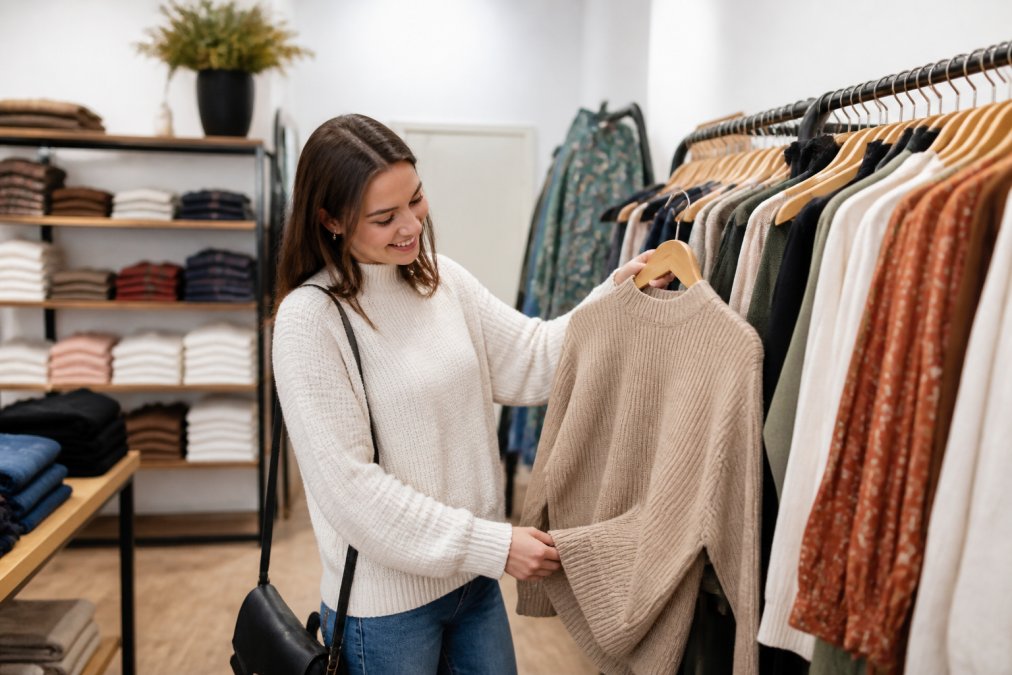
Size Inclusivity and Fit: Plus-Size Fashion Availability
Plus-size fashion availability is often the first thing shoppers test. Ask whether the size chart reflects real measurements and whether reviews mention fit running true. A boutique that publishes detailed measurements and welcomes fit questions is usually the safer bet.
Regional Shipping Speed Analysis: What Delivery Times Look Like Coast to Coast
Domestic shipping is faster and more predictable than cross-border delivery, but "a few business days" hides a lot of variation. Distance, carrier network density, and weather all shift timelines, and the difference between a major urban corridor and a remote region can be several days. Here is how the picture generally breaks down for orders shipped within the country.
Typical Domestic Delivery Windows by Region
These are general patterns most shoppers report, not guarantees, since the specific carrier and service level matter:
- Southern Ontario and the Greater Toronto Area, often the fastest corridor, with many domestic orders landing in two to three business days.
- Quebec and the Montreal area, typically two to four business days, with strong carrier coverage along the St. Lawrence corridor.
- British Columbia and the Lower Mainland, usually three to five business days, with coastal weather occasionally adding a day.
- Alberta, Saskatchewan, and Manitoba, commonly three to five business days, with prairie weather a seasonal factor.
- Atlantic provinces, often four to six business days, since parcels travel further from central distribution hubs.
- Northern and remote communities, can run a week or more, and some carriers add surcharges or use air freight for the final leg.
Why Domestic Beats Cross-Border on Predictability
The advantage is not just speed, it is variance. A domestic parcel moves through a single carrier network with no border clearance step, so the delivery window is narrower. A cross-border parcel passes through customs, where dwell time depends on volume, documentation, and inspection, and then hands off to a domestic carrier for the final leg. Each handoff is a place where the estimate can slip.
Free Shipping Thresholds and Order Tracking
Watch the free shipping threshold and confirm order tracking is included. Tracking also means you know exactly when your parcel will land.
How to Read a Shipping Estimate Before You Buy
A few checks separate a realistic estimate from a marketing one:
- Origin, not brand, confirm the warehouse location, since a domestic-sounding brand can still ship from overseas.
- Service level, standard, expedited, and express tiers can differ by several days; the cheapest tier is usually the slowest.
- Cut-off time, orders placed after a daily cut-off typically start processing the next business day.
- Tracking included, a tracking number is the difference between a real estimate and a guess.
- Return address, a domestic return address means returns do not trigger re-import fees or another customs cycle.
Sustainable Alternatives and Ethical Manufacturing: Reading Consumer Transparency Claims
Ethical manufacturing claims are only as good as the proof behind them. Consumer transparency means a brand tells you where and how its clothing is made, not just that it cares. When a label is vague about its supply chain, treat the claim as marketing until you see specifics.
A "sustainable" tag with no supply-chain detail is a red flag. Without named factories or certifications, you cannot verify the claim, and you may be paying more for the same fast-fashion product.
Building a Capsule Wardrobe with Budget-Friendly Wardrobe Staples
A capsule wardrobe is a small set of versatile pieces that mix and match into many outfits. Building one starts with neutral basics: a few tops, one or two dresses, and layers that work across seasons. Buying fewer, better pieces from a local boutique keeps costs predictable and your closet cohesive.
- Neutral tops that pair with everything
- One versatile dress for day or evening
- A cozy sweater or vest for layering
- Denim or tailored trousers in a solid color
- One statement piece to add personality
Frequently Asked Questions
Is there a Canadian equivalent to Shein?
There is no single direct replacement, but several Canadian-based online boutiques and marketplace sellers offer trend-driven apparel without cross-border shipping. Shopping from a Canadian-based retailer means your order ships domestically, so you skip duty fees, customs charges, and import taxes that apply to parcels arriving from overseas. Look for stores with clear fabric composition details, published return policies, and real customer reviews before you buy.
How can I avoid duty fees when shopping for clothes online?
The simplest way to avoid customs fees on clothes is to buy from retailers that ship from within Canada. Domestic parcels are not subject to import taxes or CBSA assessment. If you do order internationally, check whether the seller collects duties at checkout, keep your order value low, and read the shipping terms carefully so you know who pays the brokerage fee before your package arrives.
What should I look for when choosing a sustainable clothing brand?
Start with fabric composition. Natural fibers like cotton, linen, and wool generally last longer and shed fewer microplastics than synthetic blends. Then check consumer transparency: does the brand publish where its clothes are made, how workers are treated, and what its return policy is? Ethical manufacturing claims should be specific, not vague. A boutique that names its suppliers and explains its charitable giving is easier to trust than one that only uses marketing language.
Are affordable clothing boutiques in Canada worth trying over fast fashion?
They often are, especially when you factor in the hidden costs of fast fashion. Cross-border orders add duty fees, customs charges, and currency conversion, which can push your final total well above the listed price. Canadian boutiques typically ship domestically, offer clearer sizing, and let you return items without overseas postage. The trade-off is smaller inventory variety, but the pieces you buy tend to work harder in your wardrobe.
The real challenge is not finding cheap clothes, it is finding pieces that fit well, last, and arrive without a surprise customs bill. Betty Be Good Boutique offers a handpicked collection shipped from within Canada to Canada, with no duty and no overseas returns, plus free shipping on orders over $99. Shop online or visit the boutique in White Rock to fall back in love with fashion. Get started with Betty Be Good Boutique and build a wardrobe you actually wear.


0 comments