Ethical Boutique Fashion Online Shopping Guide
Posted on septembre 08 2026

Table of Contents
- What Makes a Fashion Brand Truly Ethical?
- How to Identify Ethical Fashion Brands in 5 Steps
- The Price of Ethics: Understanding Cost Per Wear
- Sustainable Fabrics That Feel as Good as They Look
- Our Picks: Ethical Boutique Fashion Staples
- Avoiding Duty Fees on Online Clothing Orders
- The Social Impact of Your Shopping Choices
- Conclusion: Build a Wardrobe You Can Feel Good About
- Frequently Asked Questions
Last Updated: September 9, 2026
Ethical boutique fashion online shopping is the practice of buying clothing from curated retailers who prioritize sustainable materials, fair labor practices, and social responsibility over mass production. For Canadian shoppers, this approach has moved from niche interest to mainstream priority.
You don't need to spend hundreds of dollars per item to shop responsibly. What matters is understanding which fabrics last, which certifications actually mean something, and how to calculate the real value of what you wear.
What Makes a Fashion Brand Truly Ethical?
A fashion brand earns the "ethical" label through verifiable practices across its entire supply chain, not through marketing language alone.
Sustainable textiles are only part of the equation. The most reliable approach combines material choices with verified ethical manufacturing standards.
How to Identify Ethical Fashion Brands in 5 Steps
Identifying ethical fashion brands requires looking past the aesthetic and examining the systems behind the clothes.
- Check the fabric composition. Natural fibers like Tencel, modal, and organic cotton have a lower environmental footprint than virgin synthetics.
- Look for ethical certifications. Third-party verification prevents brands from self-reporting vague claims.
- Examine supply chain transparency. Brands that publish factory lists or sourcing details have nothing to hide.
- Assess the price-to-quality ratio. If a garment costs less than a coffee, someone in the chain is being underpaid.
- Consider garment longevity. Will this piece survive 30 washes and still look polished?
Look Beyond the Label: Certifications That Matter
Not all certifications carry equal weight. Fair trade certification verifies that farmers and workers receive fair wages and work under safe conditions. GOTS certification ensures organic status from harvesting through manufacturing.
When a label claims "eco-friendly" without certification, treat it as marketing rather than fact. Genuine ethical fashion brands welcome scrutiny because they have nothing to hide. According to guidance from the Competition Bureau of Canada on greenwashing, vague environmental claims without substantiation can mislead consumers, so look for specific, verifiable details rather than buzzwords.
The Price of Ethics: Understanding Cost Per Wear
Cost per wear is the most honest way to evaluate whether an ethical purchase fits your budget. Divide the price of a garment by the number of times you realistically wear it.
A $34.90 top worn twice a month for two years costs about 73 cents per wear. A $10 fast-fashion piece worn twice before falling apart costs $5 per wear. The numbers reveal why investing in quality staples, rather than chasing trends, saves money over time.
This is where boutique curation earns its keep. When a retailer handpicks pieces that coordinate with each other, you avoid the costly mistake of buying items that never work with the rest of your wardrobe.
Sustainable Fabrics That Feel as Good as They Look
Sustainable textiles have evolved dramatically, and today's options rival conventional fabrics in comfort and durability.
The Lifecycle of Natural and Semi-Synthetic Fibers
Tencel (Lyocell): Made from sustainably harvested wood pulp in a closed-loop process that recycles over 99% of the solvent. It offers a silky drape, resists wrinkles, and is remarkably breathable. Tencel is biodegradable and compostable in industrial facilities.
Modal: Derived from beech trees, modal is prized for its buttery softness and shape retention. Look for the EU Ecolabel or FSC-certified wood sources to ensure responsible forestry. Like Tencel, modal is biodegradable.
Organic Cotton: Grown without synthetic pesticides or fertilizers, organic cotton uses significantly less water than conventional cotton. While it is biodegradable, the dyes and finishes applied can hinder this process. Look for brands using low-impact or natural dyes to maximize compostability.
The Synthetic Reality: What Happens to Polyester and Polyurethane?
- Recycled Polyester (rPET): Made from recycled plastic bottles, rPET reduces waste and energy use compared to virgin polyester. However, it still sheds microplastics during washing and is not biodegradable. It can be recycled again, but the infrastructure for textile-to-textile recycling is still limited in Canada.
- Polyurethane (PU) 'Vegan Leather': PU is a plastic. While it avoids the environmental toll of animal agriculture, it is not biodegradable and can be difficult to recycle due to its composite nature. A high-quality PU garment can last for years, which is its primary sustainability benefit, durability that keeps it out of the landfill.
Practical End-of-Life Strategies for Your Ethical Garments
When a piece from your ethical wardrobe finally reaches the end of its usable life, consider these options in order of preference:

- Repair and Upcycle: Before discarding, consider simple repairs. A visible mend can add character, or you can transform a worn-out shirt into a cleaning rag or a tote bag. Many Canadian cities now have repair cafes and workshops.
- Resell or Donate: If the garment is still in good condition, sell it on Canadian platforms like Poshmark or Depop, or donate it to a local charity. This extends its life and keeps it out of the waste stream.
- Textile Recycling: For items that are truly beyond repair, seek out textile recycling programs. Many municipalities in Canada have textile drop-off bins, and some brands offer take-back programs. These programs break down fibers for use in insulation, carpet padding, or new yarns.
:::tip Extending Garment Life Proper care is the first step in end-of-life management. Washing in cold water, air-drying, and using a garment bag for delicates can dramatically extend the life of natural fibers, reducing the frequency with which you need to replace them.
How to Verify a Fabric's True Environmental Impact
When shopping online from an ethical boutique, look for specific details about fabric origins and processing. A simple 'Tencel' label is not enough.
- Specific certifications: GOTS for organic cotton, FSC or PEFC for wood-based fibers like Tencel and Modal.
- Dye and finish information: Look for 'low-impact dyes' or 'Oeko-Tex Standard 100' certification, which ensures no harmful substances are used.
- Care instructions: Brands that genuinely care about sustainability will provide detailed care instructions to help you extend the garment's life.
Our Picks: Ethical Boutique Fashion Staples
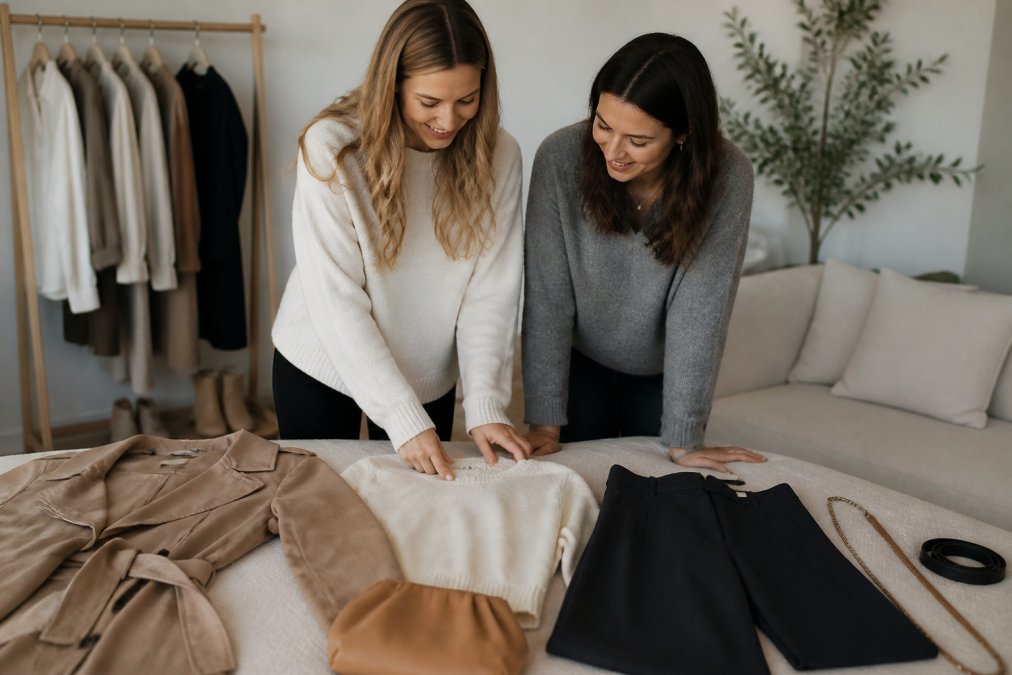
Building an ethical wardrobe starts with versatile foundation pieces that transition across seasons and occasions.
Tencel Tie Waist Wide Leg Pants: The Comfortable Choice
These pants showcase why Tencel has become a favorite among conscious shoppers. The 100% Tencel fabric drapes beautifully while remaining breathable and easy to care for. With a true-to-size fit and an inseam that hits at the ankle for a polished silhouette. The loose waist and hips provide comfort without sacrificing style. At $89.90, they deliver the kind of garment longevity that makes cost-per-wear calculations work in your favor.
Modal Scuba Luxe Quarter Zip Pullover: Effortless Layering
This pullover pairs the silky smoothness of modal with an oversized, fashion-forward cut. The half-zip closure and bubbled sleeves add visual interest, while the front pocket and dropped shoulder design keep things relaxed. Made from 48% modal, 45% polyester, and 7% spandex, it offers stretch and recovery that maintains its shape. For $94.90, it coordinates perfectly with the straight-leg joggers in the same fabric blend.
Vegan Leather Belted Trench Coat: A Cruelty-Free Classic
A trench coat is the ultimate test of garment longevity, and this vegan leather version delivers. Made from 100% polyurethane, it offers the polished look of leather without animal products. The fitted waist creates a flattering silhouette, while the mid-calf length provides coverage for transitional weather. At $109.90, this is an investment piece designed to anchor your wardrobe for years.
| Item |
|---|
| Fabric |
| --- |
| Tencel Tie Waist Wide Leg Pants |
| Modal Scuba Luxe Quarter Zip |
| Vegan Leather Belted Trench |
Avoiding Duty Fees on Online Clothing Orders
Duty fees represent one of the biggest frustrations for Canadians shopping online. When ordering from international retailers, you may face customs charges, brokerage fees, and currency conversion costs that add significantly to your total.
The simplest way to avoid these surprises is to shop from retailers who ship from within Canada. When your order originates domestically, it crosses no international borders, which means no duty, no customs delays, and no unexpected fees at delivery.
Overseas returns often cost more than the original item, making them impractical. Canadian-based retailers eliminate this concern entirely.
The Social Impact of Your Shopping Choices
Every purchase you make sends a message about the kind of world you want to live in. When you choose ethical fashion brands, you support businesses that pay fair wages, maintain safe working conditions, and contribute to their communities.
The Ripple Effect of Conscious Consumerism
When you choose a brand that prioritizes fair labor, you are directly contributing to:
- Living Wages: Supporting workers' ability to afford food, housing, healthcare, and education for their families.
- Safe Working Conditions: Funding factories that meet fire safety standards, have proper ventilation, and do not rely on forced overtime.
- Community Investment: Enabling brands to invest in local infrastructure, such as schools, clean water projects, and healthcare clinics.
Moving Beyond the Buzzword: A Greenwashing Verification Checklist
Use this practical checklist when evaluating a boutique or brand online. This is your defense against greenwashing, the practice of making misleading claims about a product's environmental or social benefits.
The 5-Point Verification Checklist:
- Look for Specific, Not Vague, Language: A brand that says 'we care about our workers' is not enough. Look for specifics: 'Our factory in Dhaka is audited twice a year by [a named third-party].' Vague terms like 'eco-friendly,' 'sustainable,' or 'conscious' without substantiation are red flags.
- Check for Third-Party Certifications: Certifications like Fair Trade Certified, B Corp, or SA8000 provide independent verification of a brand's social and environmental performance. These are not perfect, but they offer a baseline of accountability. A brand that is truly committed will proudly display these logos and explain what they mean.
- Demand Supply Chain Transparency: Does the brand publish a list of its factories or its suppliers? Do they name their fabric mills? Radical transparency is a hallmark of a brand with nothing to hide. If this information is difficult to find or absent, treat it as a warning sign.
- Scrutinize the Price: If a garment is priced suspiciously low, ask yourself how the people who made it were compensated. While high price does not always equal ethics, an extremely low price almost always means someone in the supply chain was underpaid. Use your judgment to assess if the price reflects a living wage for the workers.
- Read the 'About Us' and 'Impact' Pages Critically: Look for stories, photos, and data that support their claims. Do they share the names and faces of the people in their supply chain? Do they publish annual impact reports with measurable goals? A genuine commitment is demonstrated through consistent, verifiable action, not just a single blog post.
The Role of Boutiques in Amplifying Impact
A curated ethical boutique acts as a filter for you. By choosing to shop from a boutique that has already vetted its brands for social responsibility, you are using their research and due diligence.
Conclusion: Build a Wardrobe You Can Feel Good About
Building an ethical wardrobe isn't about perfection or spending beyond your means. Focus on quality fabrics, verify certifications, calculate cost per wear, and support retailers who share your commitment to people and the planet.
At Betty Be Good Boutique, our handpicked collection brings together sustainable materials, affordable pricing, and effortless style. We ship from within Canada, so your order arrives without duty fees, and we offer free shipping to Canada and the US when you spend $99 or more. Whether you shop online or visit our physical boutique in White Rock, British Columbia, we will help you fall back in love with fashion while staying true to yourself.
Frequently Asked Questions
What defines an ethical fashion brand?
An ethical fashion brand prioritizes fair labor practices, environmental sustainability, and supply chain transparency. This means paying workers fair wages, using eco-friendly materials like organic cotton or Tencel, and minimizing waste. Look for brands that openly share where and how their clothes are made. Supporting these brands helps promote a fashion industry that respects both people and the planet, moving away from harmful fast-fashion norms.
How can I verify if a clothing brand is truly ethical?
Start by checking a brand's website for details on their supply chain and manufacturing partners. Look for third-party certifications like Fair Trade or B Corp. Read reviews and see if they discuss labor rights or environmental impact. Be wary of vague claims without evidence. For example, a brand that ships from within Canada to Canada and clearly lists fabric contents, like our Tencel pants, shows a level of transparency that supports its ethical claims.
How do I avoid hidden duties when shopping for fashion online?
When ordering from international sites, duties and taxes can add unexpected costs. To avoid this, shop from retailers that ship from within your own country. Many Canadian-based boutiques offer free shipping over a certain amount, and you will not face customs fees or overseas return hassles. This ensures the price you see is the price you pay, making your budget more predictable and supporting local businesses.
Why is shopping at local boutiques better for the environment?
Shopping at local boutiques often reduces the carbon footprint associated with long-distance shipping. Because items travel shorter distances, less fuel is consumed. Many boutiques also curate smaller collections, which means less overproduction and waste compared to mass-market retailers. By choosing quality pieces from a curated selection, you support a slower, more sustainable model of fashion that values garment longevity over constant consumption.
What is cost per wear and why does it matter?
Cost per wear is the price of an item divided by the number of times you wear it. A $90 pair of pants worn 30 times costs $3 per wear, while a $30 pair worn twice costs $15 per wear. Thinking this way encourages buying better-quality, versatile pieces that last. It shifts the focus from initial price to long-term value, which is a core principle of conscious consumerism and building a sustainable wardrobe.
Get started with Betty Be Good Boutique and build a wardrobe that looks good, feels good, and does good. SHOP NOW to explore our curated selection of ethical fashion staples.

0 comments