
Is Buying Canadian Fashion Online Worth It? 2026 Guide
Posted on octobre 02 2026

Table of Contents
- The Real Cost of Buying Canadian Fashion Online
- Avoiding Duty Fees on Clothing: What Changes When You Buy Domestic
- Online Shopping Return Policies in Canada: What to Expect
- Benefits of Shopping Local Fashion: Quality, Fit, and Value
- Cost-Per-Wear: Why a $109 Pair of Jeans Beats Three $40 Pairs
- How to Verify a Canadian Boutique Is Legitimate
- Verdict: When Buying Canadian Fashion Online Is Worth It
- Frequently Asked Questions
Last Updated: October 2, 2026
The Real Cost of Buying Canadian Fashion Online
Is buying Canadian fashion online worth it? For most shoppers, yes, provided you check where the item ships from before you pay. A domestic order avoids the duty and brokerage surprises that hit cross-border parcels. This guide covers the real checkout total, the return rules, and how to judge quality before you commit.
The catch most shoppers miss: "Canadian boutique" and "ships from Canada" are two different claims. Plenty of sites market to Canadian buyers while warehousing stock abroad, and when that parcel crosses the border, you cover the extra charges.
What You Actually Pay at Checkout
The sticker price is rarely the final number. What lands on your card depends on where the item ships from, who handles brokerage, and whether tax was collected upfront.
A domestic order is straightforward: listed price plus applicable sales tax, and that is the end of it.
That is the biggest argument for buying from a seller who ships within the country: it removes an entire category of cost.
Avoiding Duty Fees on Clothing: What Changes When You Buy Domestic
Buying domestic removes duty fees on clothing entirely, because the parcel never crosses a border: no customs assessment, no brokerage line item, no courier invoice weeks later. Understanding why a domestic parcel escapes those charges lets you spot the difference before you check out.
The Three Charges a Cross-Border Parcel Can Pick Up
When goods enter the country, the Canada Border Services Agency assesses them on three separate lines:
- Customs duty, a percentage based on the goods' tariff classification and country of origin. Apparel often carries a meaningful rate.
- Sales tax, federal and provincial tax applied at the border, collected by the courier rather than the retailer.
- Brokerage or handling fee, charged by the courier for clearing the parcel. This is the line item shoppers most often forget, because it is not a government charge and varies by carrier.
A domestic order collapses all three into a single, predictable line: the listed price plus applicable sales tax at checkout. Nothing arrives later.
How to Verify an Item Actually Ships From Within the Country
This step determines whether you pay border charges at all.
-
Check the shipping origin, not the domain. A
.caweb address tells you nothing about where the stock sits. Look for a shipping page that states the warehouse or dispatch location. - Read the returns address. If returns go to a domestic address, the stock almost certainly ships domestically too. If returns go overseas, expect the parcel to arrive from overseas as well.
- Look for a stated shipping promise. A retailer that ships from within the country can usually commit to a short, tracked domestic delivery window. Vague or open-ended timelines often signal a cross-border fulfillment path.
- Check the currency and tax display. A domestic seller typically shows prices with applicable tax calculated at checkout. A cross-border seller often bills in a foreign currency and leaves tax to the border.
What the Two Paths Actually Cost You
| Cost factor | Ships from within the country | Ships from outside the country |
|---|---|---|
| Customs duty | None | May apply on delivery |
| Brokerage fee | None | Often charged by courier |
| Tax collection | At checkout | At the border |
| Return shipping | Domestic rate | Often international |
| Delivery time | A few days | Longer, held at customs |
| Payment timing | One charge | Possible second invoice weeks later |
The last row catches people: a cross-border parcel can arrive, feel like a completed transaction, then generate a separate courier invoice for duty and brokerage weeks later, the delayed charge that turns a bargain into a regret.
Why This Matters More for Apparel Than for Most Categories
Clothing sits in an awkward spot for cross-border shopping: frequently subject to duty, size-sensitive (so returns are common), and often bought in multiples.
A domestic order sidesteps the chain: you pay the listed price plus tax, receive the parcel in a few days, and if something does not fit, the return is a domestic shipment. That is a structural advantage, not a marketing claim.
Online Shopping Return Policies in Canada: What to Expect
Online shopping return policies in Canada vary widely, and the returns address tells you more than the policy wording does. A domestic return label means mailing a parcel a few provinces away; a cross-border return means shipping internationally, often at your own cost.
The Reverse-Logistics Problem Nobody Prices In
Returns are the quiet expense of buying clothes online. When a garment travels back across a border, three things happen at once:
- You pay international postage, which for a single garment can approach or exceed the item's value.
- You may not recover the duty you already paid on the original import, because duty is assessed on entry, not on the eventual outcome of the sale.
- The parcel re-enters the system, adding handling and, in some cases, a second brokerage event.
The environmental side is just as real: a cross-border return travels roughly twice the distance of a domestic one, and a meaningful share of returned apparel is never resold.
A domestic return collapses this: a short domestic route, quick restocking, and no international postage to correct a sizing mistake.
The Three Things to Read Before You Buy
- The return window. Thirty days from delivery is common, but some boutiques run shorter. Note whether the clock starts at delivery or at order date, the difference can be a week or more.
- Who pays return shipping. Domestic labels are usually affordable and sometimes prepaid. International returns rarely are, and the cost often falls entirely on you.
- The condition rules. Tags attached, unworn, original packaging. Most boutiques enforce this strictly, and a garment returned without tags is frequently refused.
The Returns Address Is the Tell
If the returns address points outside the country, expect a slower, pricier process. If it points to a domestic address, the return is a short domestic shipment.
Before you order, ask three practical questions:
- Where does a return physically go?
- Who pays the return postage?
- How long does a refund take once the parcel is received?
A retailer that answers all three clearly has a working returns process; a vague one does not.
Why a Domestic Return Changes the Math
A return is not a failure; it is a normal part of buying clothing you cannot try on first. The question is what it costs you, in money, time, and the footprint of a parcel that travels twice as far as it needed to.
Ribbed Scoop Long Sleeve Top →
When a retailer ships from within the country to within the country, the return path is short, the postage is domestic, and there is no second border event, the structural reason a domestic order is lower-risk than a cross-border one.
Benefits of Shopping Local Fashion: Quality, Fit, and Value
The benefits of shopping local fashion show up in fit and follow-through more than in any single feature. A domestic seller can describe a garment in the sizing language you actually wear.
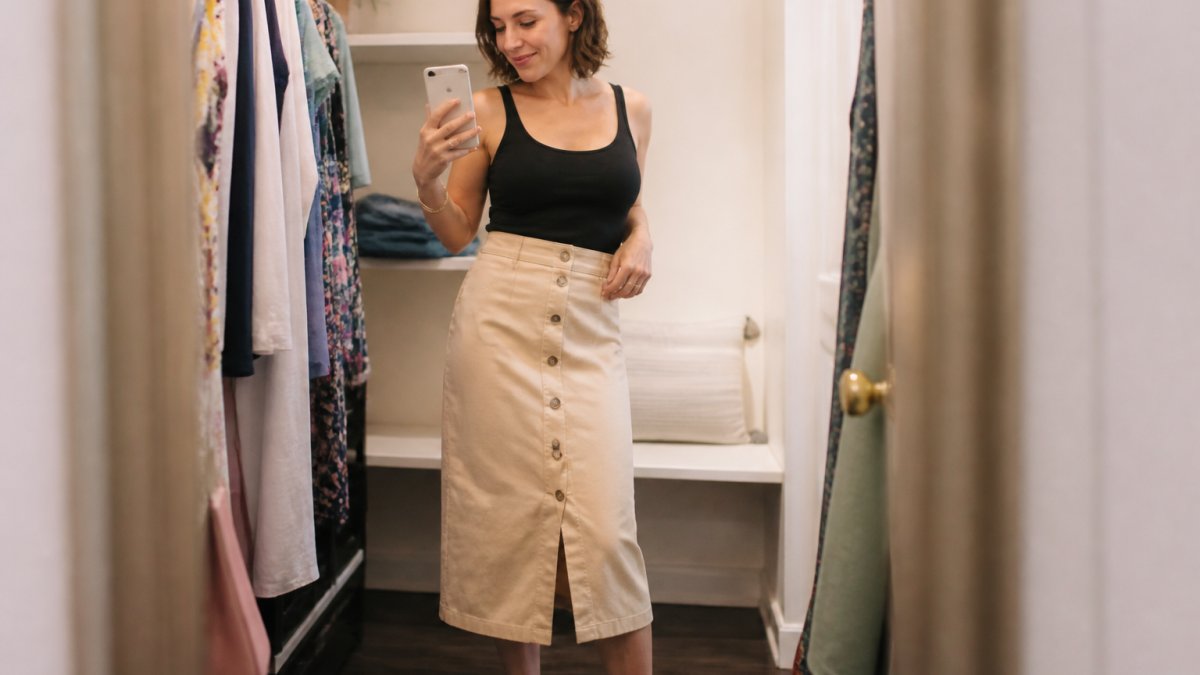
A boutique that publishes real fit notes, not just a size chart, saves you the guesswork. Betty Be Good Boutique lists measurements like inseam, rise, and length for each piece, so you can compare against something already in your closet. The High-Rise Cuff Boyfriend Jeans, for example, list a 10-inch rise and a 26.5-inch inseam after the cuff, telling you exactly where they will sit and break.
How to Judge Quality Before You Buy
You can assess quality before the parcel arrives by reading fabric composition and construction details, not marketing copy. A listing that names its blend tells you how the garment will wear and wash.
Look for specifics:
- Fabric percentages. A higher natural-fiber share usually means better breathability and drape.
- Construction notes. Lined skirts, functional pockets, and finished seams are worth more than adjectives.
- Fit data with numbers. Rise, inseam, and length in centimeters or inches beat "true to size" alone.
Cost-Per-Wear: Why a $109 Pair of Jeans Beats Three $40 Pairs
Cost-per-wear is the price of a garment divided by the number of times you actually wear it, the most honest way to compare a cheap purchase against a better one.
That arithmetic makes a considered purchase cheaper than a bargain. The Tummy Tuck Straight Leg Jeans and the High-Rise Cuff Boyfriend Jeans both list specific stretch blends, which keeps denim from losing shape after a few washes, denim that holds its fit gets worn longer, and cost per wear keeps falling.
The same logic applies across a wardrobe. A Ribbed Scoop Long Sleeve Top at $34.90 that layers under sweaters for three seasons does more work than three trend pieces that date in a month.
How to Verify a Canadian Boutique Is Legitimate
You can verify a boutique is legitimate by checking its physical presence, contact details, and published policies before you order. Real businesses are easy to confirm; vague ones are not.
Run through this checklist:
- A real street address for a physical store, not just a PO box
- A working phone number or contact form that gets answered
- A published return policy with a named returns address
- Product listings with fabric composition and measurements
- A shipping origin stated clearly on the site
A boutique with a storefront you could walk into is a different proposition from an anonymous site with stock photos. Betty Be Good Boutique's listings publish fabric blends and fit measurements, the detail that separates a real retailer from a dropshipper.
Verdict: When Buying Canadian Fashion Online Is Worth It
Buying Canadian fashion online is worth it when the seller ships from within the country, publishes real fit and fabric details, and offers a returns process you can actually use, three conditions that remove the cost and risk of cross-border shopping.
It is not worth it when the site is vague about origin, hides its return address, or lists no measurements, then you are paying for a gamble, not a garment.
For shoppers who want an elevated everyday look without the markup, a curated domestic boutique solves most of the problem at once: you skip border charges, get fit notes you can trust, and can return something without shipping it overseas.
The hardest part of shopping online is trusting that what arrives matches what you pictured.
Frequently Asked Questions
Is it actually cheaper to buy Canadian fashion online than from international sites?
Not always on sticker price, but often on total cost. International orders can trigger import duties and customs handling fees that arrive after checkout, plus return shipping that crosses a border. Domestic orders avoid that entirely. When you factor in cost-per-wear, a $109 pair of tummy tuck straight leg jeans worn twice a week for a year costs under $1.10 per wear, which beats replacing a cheaper pair every few months.
How do I know a Canadian online boutique is legitimate before I order?
Check for a real physical address, a published return policy, and a working phone number or contact form. Look for customer reviews on independent platforms, not just the site itself. Also confirm the business ships from within Canada, since that signals domestic operations rather than a drop-shipping setup.
What should I check in an online shopping return policy in Canada before buying?
Look for the return window, who pays return shipping, whether refunds or store credit are issued, and whether sale items are excluded. Domestic boutiques typically offer simpler returns because items never cross a border. If a policy requires you to ship internationally for a return, that cost usually cancels out any savings. Read the fine print on final-sale items before you commit.
Does buying from a Canadian boutique really help the local economy?
Yes, and the effect is more direct than with large international retailers. Money spent at a domestic boutique circulates through local wages, rent, and suppliers. Smaller brands also tend to produce in smaller batches, which reduces overproduction and waste. If the boutique supports a cause, like funding for human trafficking survivors, your purchase supports that mission alongside the local economy.


0 comments